
In 2025, the Indian Gaming Industry crossed a 520 million gamer user base. That is over a third of the population.
The FICCI-EY 2026 media and entertainment report puts the gamer base at 515 million to 525 million. The same report projects video gaming revenue to reach ₹9,200 crore by 2028.
This piece breaks down what the numbers actually say. Who is playing. Where the money is. How the new gaming law changes the road ahead. And what it means for Indian players, creators, and brands in the next two years.

The Headline Numbers From FICCI-EY 2026
The report, released on 24 March 2026, gives a clean view of the Indian gaming economy.
Key figures from the 2025 dataset:
- Total gamers in India: 515 million to 525 million
- Daily active users: over 100 million
- Video gaming revenue forecast by 2028: ₹9,200 crore
- Projected CAGR through 2028: 13 percent
- Mobile share of gaming revenue in 2025: 79.29 percent
The growth in the player base is steady. India had 488 million online gamers in 2024 per the previous FICCI-EY report. Adding around 33 million players in a single year is a strong pace for any market.
The Indian government's own valuation has been more conservative. It pegged the online gaming market at ₹23,200 crore in 2025 and projects ₹31,600 crore by 2027. That is a 36 percent jump in three years.
Who Is Playing and on What Device
Indian gamers skew young and increasingly mixed in gender.
Demographic breakdown for 2025:
- Under age 30: roughly 50 percent of the entire gamer base
- Male share: 56 percent
- Female share: 44 percent
- Average gaming time per week (women): 11.2 hours
- Average gaming time per week (men): 10.2 hours
The female gamer base has grown by 3 percentage points since 2023. Indian women now play slightly more per week than Indian men. That data point challenges the older perception of gaming as a boys-only hobby.
Device dominance is clear. Mobile platforms held 55.12 percent of market share in 2025. Android devices priced under ₹12,500 are the main gateway for new gamers.
Console and PC are smaller but stable. They are driven by esports and content creators rather than casual play. The PC and console base will likely grow as global AAA releases like Forza Horizon 6 and GTA 6 hit India in 2026.
The Money Side: Revenue, ARPU, and IAP
The total Indian gaming market generated around ₹49,500 crore in 2025. Forecasts put it at ₹1.4 lakh crore by 2034. That is a CAGR of 14.6 percent.
Mobile gaming alone is expected to reach about ₹1 lakh crore by 2034, from ₹29,400 crore in 2025.
In-app purchases drive most of the spending. IAP held a 40.45 percent share of the gaming market in 2025.
UPI micro-payments make small in-game transactions easy in India. That is structurally different from Western markets.
Battle Royale and Shooter genres contribute over 40 percent of total IAP revenue. BGMI and Free Fire MAX sit at the centre of that share.
Average revenue per user (ARPU) is where India still lags far behind.
- India ARPU: around ₹254 per gamer per year
- United States ARPU: around ₹18,060 per gamer per year
- China ARPU: around ₹5,710 per gamer per year
The gap is real. It also points to a long growth runway as Indian disposable income rises and payment infrastructure deepens.
The Major Players in the Indian Gaming Market
The market is no longer dominated by foreign studios alone.
Top operators and groups active in India in 2026:
- Krafton: BGMI publisher and runs the KIGI incubator for Indian devs
- Nazara Technologies: listed Indian gaming holding group
- Dream Sports: owns Dream11 and a wider gaming portfolio
- Games24x7: operates RummyCircle and My11Circle
- Garena: Free Fire MAX in India, building toward a Free Fire India relaunch
- Riot Games: Valorant via NODWIN Gaming's South Asia operations
The Online Gaming Authority of India (OGAI), set up under MeitY in May 2026, now sits above all of these. The regulator classifies games into three buckets: prohibited money games, permissible social games, and esports.
This is the biggest single change to how Indian gaming is governed. Operators that invest early in compliance will have an advantage by 2027.
How Audience Sentiment Has Shifted
The 2025-2026 audience is more selective and more willing to spend.
Sentiment indicators from the data:
- 3 in 4 gamers already spend on non-real-money games
- Over 30 percent of paying gamers spend ₹1,000 or more per month
- Battle Royale and Shooter players drive 40 percent of all IAP revenue
- BGIS 2026 Grand Finals hit 577,685 peak concurrent viewers
The viewership record is a strong proxy for fandom. A single Indian esports event held over half a million live viewers. That is comparable to many cricket league mid-tier matches.
The implication is clear: esports has moved from a curiosity to a mainstream watch-along category in India.
Sentiment on real-money gaming has split sharply. The ban on online money games has been welcomed by parent and consumer-protection groups. It has been opposed by fantasy sports and rummy operators.
The legal challenge sits with the Supreme Court, with hearings pushed to 2026. The outcome will shape investor confidence in the entire sector.
What This Means for Indian Players and Creators
For players, the next two years will look different from the last two.
For casual mobile gamers
More polished local content. Indian studios building on Krafton's KIGI grants and Nazara's portfolio are pushing localised IPs and culturally rooted stories.
For BGMI and Free Fire MAX players
A clearer competitive calendar is in place. BMPS 2026 has a ₹2 crore plus prize pool. FFMIC 2026 has a ₹1 crore prize pool. Both run on official India servers.
For PC gamers
Hardware demand is shifting upward. As more AAA releases land in India in 2026, the demand for solid gaming peripherals is rising.
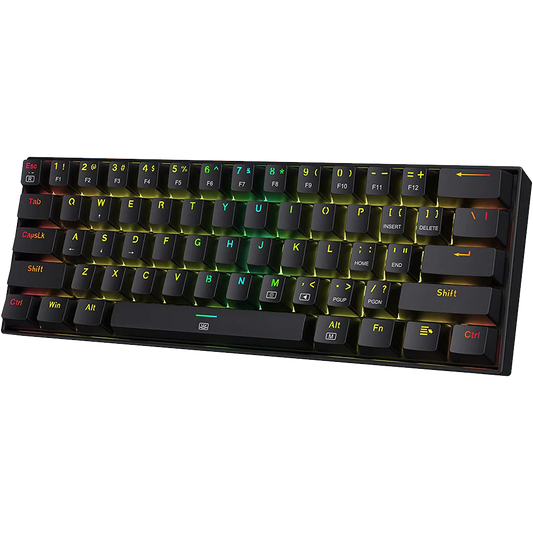
Vrkaa's keyboards collection and the ATK V75X sit in this growing space. Players moving from mobile-first setups to PC-first setups need entry-level mechanical keyboards under ₹6,000 and mid-range options up to ₹15,000. Our brand guide covers ATK gear for Indian gamers.
For creators
A less crowded competitive segment is opening up. With real-money gaming advertisements barred under the new rules, the non-RMG creator economy now gets more brand attention by default.
That benefits BGMI streamers, Valorant content makers, and lifestyle gaming creators across YouTube, Instagram, and Twitch.
What Could Happen Next: 2026 to 2028
Three shifts are likely in this window.
Shift one: revenue mix changes
Total gaming revenue should reach ₹31,600 crore by 2027 per government estimates. The share coming from non-real-money sources will rise sharply.
Real-money gaming, once 86 percent of the market, has been forced down to almost zero after the May 2026 law. The growth will come from casual, esports, and game-based learning.
Shift two: hardware demand rises
Mobile gaming will remain dominant. Console adoption is creeping up as Game Pass pricing in India stays competitive.
The GTA 6 launch in November 2026 will pull more casual players toward PC and console. Mid-segment gaming keyboards, mice, and headsets will see strong demand in the next 18 months. We have a separate list of budget gaming mice in India.
Shift three: regulation keeps moving
The OGAI is new. Its first 12 months will set precedents for how social games, esports, and skill-based formats are classified.
Operators that invest early in compliance will have an advantage by 2027. Foreign operators looking at India will wait for regulatory clarity before scaling.
Cloud gaming is also worth watching. India cloud gaming was just ₹84 crore in 2024. It is forecast to reach ₹10,900 crore by 2030.
That is a 100x growth window if mobile data plans and 5G latency keep improving across India.
Frequently Asked Questions
How many gamers does India have in 2026?
India has between 515 million and 525 million gamers as of the FICCI-EY 2026 report, released 24 March 2026. The base added around 33 million new players over 2024.
What is the size of the Indian gaming market in rupees?
India's total gaming market was around ₹49,500 crore in 2025. The government estimates it will reach ₹31,600 crore in online gaming alone by 2027. Long-term forecasts put the total market at ₹1.4 lakh crore by 2034.
How many women game in India?
Women make up 44 percent of India's gamer base. That is roughly 230 million women players in 2025. Women in India play slightly more per week (11.2 hours) than men (10.2 hours).
What is the ARPU for Indian gaming?
The average revenue per user in India is around ₹254 per year. That compares to roughly ₹18,060 in the United States and ₹5,710 in China.
Is real-money gaming legal in India in 2026?
The Promotion and Regulation of Online Gaming Rules, 2026, in force from 1 May 2026, prohibit online money games. Permissible social games and esports continue under designated safeguards.