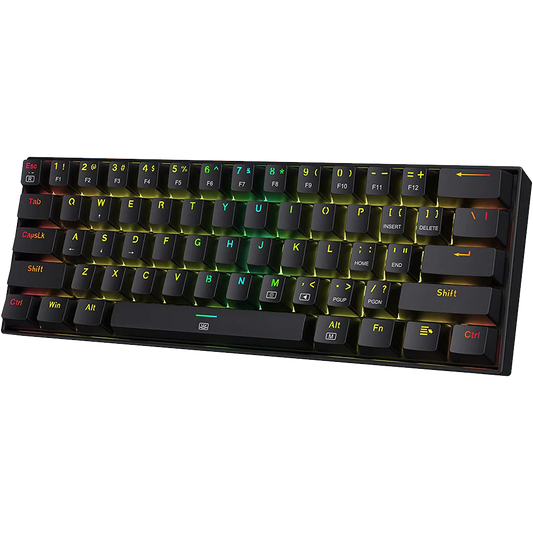

Stabilizers sit under the long keys on a mechanical keyboard. They keep the spacebar, shift, enter, and backspace level when pressed off-center. Most enthusiasts in India ignore stabilizers until they hear the rattle, the mushy thud, or the side-to-side tilt that ruins a typing session. This guide covers what Indian builders need to know about keyboard stabilizers: the two main types, how they shape sound and feel, which mods are worth doing, and how to source them in 2026.

What Stabilizers Do and Which Keys Need Them
A stabilizer is a mechanical insert that prevents long keys from tilting under uneven finger pressure. A standard 65% or 75% mechanical keyboard has six stabilizers: the spacebar uses a 6.25u or 7u stab; both shift keys use 2.25u or 2.75u stabs; the enter key uses a 2.25u stab; the backspace uses a 2u stab. Full-size and TKL boards add more for the numpad zero and wider spacebars.
Each stabilizer has two housings, a metal wire that links them, and stems that engage with the keycap. The wire diameter is typically 1.5mm to 1.6mm depending on the brand. Without stabilizers, pressing the corner of a 2.25u shift key causes the opposite corner to drop slowly, producing an uneven keypress and audible tilt. The stabilizer is the second-most overlooked part of a mechanical keyboard. A poorly tuned stab can ruin the sound of an otherwise premium board.
Stabilizer Types: Plate-Mount and Screw-In Compared
Two stabilizer types dominate the Indian market. Plate-mount stabilizers clip into the top plate of the keyboard. Screw-in stabilizers attach directly to the PCB with small screws. Both perform the same function but mount differently.
Plate-mount stabs are easier to install since the keyboard does not need a full teardown. They are also more common on entry-level and pre-built keyboards under ₹3,000 in India. The trade-off: plate-mount stabilizers wobble more and rattle more than screw-in alternatives. They also feel less consistent over months of use. Replacement is straightforward: pull the keycap, unclip the stab, swap in a new one.
Screw-in stabilizers attach directly to the PCB using two small Phillips screws per stab. They are standard on enthusiast boards and most hot-swappable keyboards above ₹4,500. Screw-in stabs hold tighter and feel more stable under firm typing. Installation requires removing the plate and accessing the PCB, which means a full board teardown. Once installed, they rarely need re-tuning unless the lube wears off.
Stabilizer Sizes and the Keys They Fit
| Size | Common Keys | Notes |
|---|---|---|
| 2u | Backspace, numpad keys | Most common size after the spacebar |
| 2.25u | Left shift, enter (ANSI), right shift (some 65%) | Standard ANSI layout |
| 2.75u | Right shift (compact 65% and 75% boards) | Less common. Confirm before buying. |
| 6.25u | Spacebar (ANSI standard) | Default spacebar size |
| 7u | Spacebar (older or specific layouts) | Check board compatibility before ordering |
A typical 75% keyboard stab kit ships with one 6.25u, two 2u, and three 2.25u stabilizers. Pricing in India ranges from ₹400 for basic plate-mount kits to ₹1,500 for branded screw-in sets.
How Stabilizers Shape Typing Sound and Feel
Stabilizers have a larger effect on typing sound than most builders expect. Three issues come up consistently: rattle, mushy bottom-out, and ticking.
Rattle is the metallic sound the wire makes when it strikes the housing. It is most audible on the spacebar and is described as a high-pitched tinny noise that persists even after the switches are lubed. The fix is to lube the wire or apply a band-aid mod, both covered below.
Mushy bottom-out happens when the stab housings absorb too much downforce. The keypress lands softly with no clear tactile end. This is more common on plate-mount stabs and on boards with foam-stuffed cases. The fix is usually to reseat the stab or replace it with a tighter-fitting alternative.
Ticking is a sharper sound that happens when the stem of the keycap strikes the housing on the upstroke. It indicates loose tolerance between the stem and the housing. Some builders accept it; others swap in tighter-tolerance brands like Durock or TX.
The community on r/mkindia frequently describes spacebar rattle as the single biggest issue separating cheap pre-builds from enthusiast boards. The recommendation is to lube the stabs before lubing the switches, since stab work has more impact on the final sound.
Lubing Stabilizers: Materials and Method
Lubing transforms a rattly stab into a quiet, consistent one. The standard lubricant is Krytox 205g0, a heavy grease available from specialist keyboard stores in India for ₹600 to ₹900 per 3g jar. One jar lubes 30 to 40 stabilizers and over 200 switches.
The method has four steps. First, disassemble the stab into housings, wire, and stems. Second, apply a thin layer of 205g0 to the inside of the housings where the wire seats. Third, apply 205g0 to the bent ends of the wire where they contact the housing. Fourth, reassemble and test the stab outside the board before installing.
Two common mistakes to avoid: over-lubing the housing (more than 1mm of grease causes drag and a mushy feel); and skipping the wire ends (this is where most rattle originates). A small precision brush is sufficient. Total time for six stabs is roughly 20 minutes once practised. For a complete guide to the lubing process including switch-specific techniques, the keyboard lubing guide on Vrkaa covers each step in detail.
Dielectric grease, available at car part stores for ₹150, is sometimes used as a budget alternative. It works for the wire but is too thin for the housing. Most Indian builders treat it as a starter material before upgrading to 205g0.
Stab Mods That Actually Help: Band-Aid, Clip, and Holee
Three mods are widely used in Indian builds. Each addresses a different stab issue.
The band-aid mod softens the bottom-out by placing a small piece of fabric band-aid between the stab housing base and the PCB. This dampens the impact of the wire striking the PCB. Cost: under ₹50 for a strip of generic band-aids.
The clip mod removes the small plastic feet on the bottom of plate-mount stabilizer stems. These feet bottom out before the keycap fully presses down, causing the mushy feel. Clipping them with a fingernail clipper takes 30 seconds per stab and improves bottom-out clarity. The mod is permanent.
The holee mod stuffs a small piece of fabric inside the stab stem to prevent ticking. It is more involved and is generally only worth doing on enthusiast boards. The community on r/mkindia tends to skip the holee mod for entry boards and reserves it for builds priced above ₹8,000.
Stabilizers and Mount Type: What to Expect on Indian Boards
The type of stabilizer your keyboard supports depends on its mount design. Gasket-mount keyboards typically ship with screw-in stabilizers because the PCB is accessible during assembly. Top-mount and tray-mount designs more commonly use plate-mount stabs. Stabilizer behaviour does not change on Hall effect keyboards, since the stabs are mechanical parts regardless of how the switches register a keypress.
The ATK V75X and V75K use a gasket mount with factory-lubed screw-in stabilizers. The Aula F75 also uses screw-in stabs with factory lube. On both boards, the stabs perform well out of the box, but additional lubing of the wire ends noticeably reduces spacebar rattle for users who prefer a quieter sound profile.
Troubleshooting Common Stabilizer Problems
Spacebar rattle after lubing: the wire ends were probably missed. Disassemble, add 205g0 to the bent ends, and reassemble.
Shift key feels mushy compared to other keys: the stab is bottoming out on its own feet. Try the clip mod or replace the stab.
One stab clicks louder than others: stem and housing tolerance is mismatched. Common on plate-mount stabs. Replace with a screw-in stab if the board supports it.
Wire pops out of the housing: the housing tabs are worn. Replace the stab. Bending the tabs back rarely lasts.
Stabilizer tilts left or right under normal pressing: the wire is bent. Replace it. Bent wires cannot be reliably straightened.
Frequently Asked Questions
Do I need to lube stabilizers if my keyboard already sounds fine?
If the board sounds good to you, lubing is optional. Lubing becomes worthwhile when rattle starts or when comparing the board to an enthusiast build.
Can I replace plate-mount stabilizers with screw-in stabilizers?
Only if the PCB has screw holes for stab mounting. Most pre-built keyboards under ₹3,000 do not. Hot-swappable boards above ₹4,500 usually do. Check the PCB specification before ordering replacement stabs.
How long does lubed stab lube last?
On a daily-use board, lube lasts 12 to 18 months before needing reapplication. Boards used less often last longer.
Is the band-aid mod reversible?
Yes. The fabric is held only by adhesion and can be peeled off without residue.
Are stabilizer kits worth buying for a ₹2,000 board?
For boards under ₹2,500, replacing the stabs alone rarely justifies the cost. Lubing the existing plate-mount stabs is the better entry point. Save the upgrade budget for a hot-swap PCB instead.
Closing Notes
Stabilizers are usually the cheapest upgrade with the highest return on a build's final sound. Whether you stay with plate-mount or move to screw-in, lubing the wires is the one step worth doing on any board you plan to keep for more than a year. For the next two upgrades in the typical Indian builder's progression, the switch lubing guide and the hot-swap board guide on Vrkaa cover each step in detail.